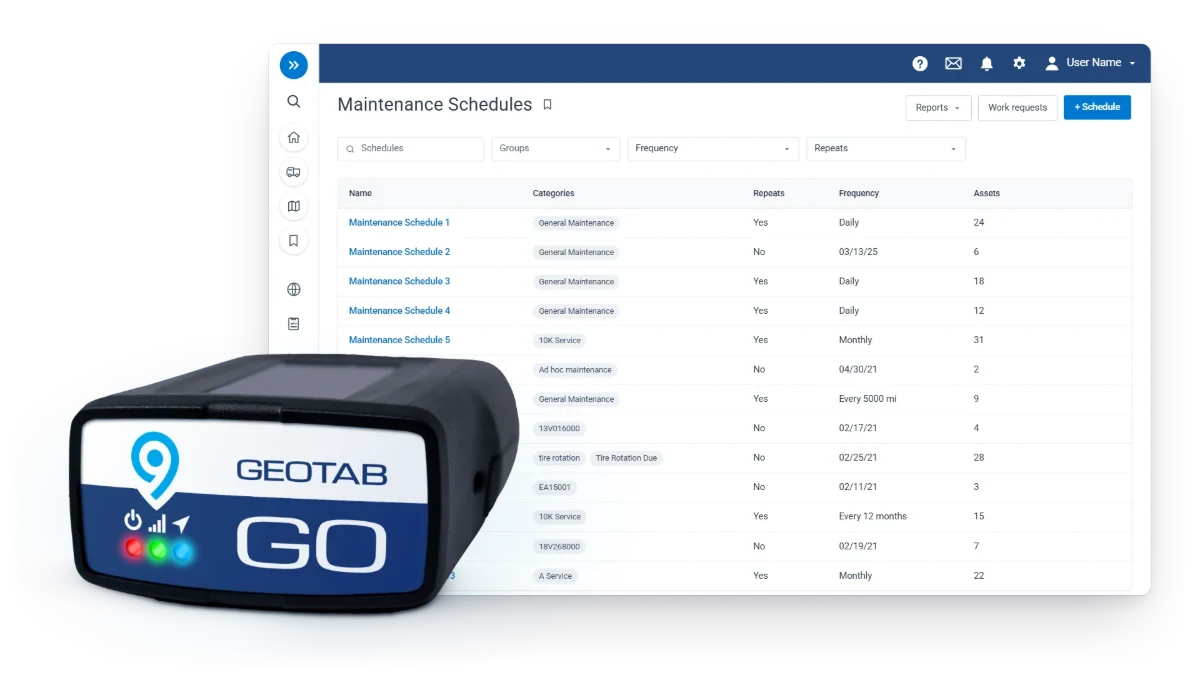
Every fleet pays for maintenance. The question is whether it pays the planned price in the bay or the emergency price on the shoulder, with a tow, a missed job and a crew waiting for help.
The gap is wide. Reactive maintenance costs 2 to 5 times more than preventive maintenance (McKinsey & Company), and the average roadside breakdown costs about $1,200 (NPTC Benchmarking Survey), before you count the missed work.
Geotab keeps the work on the planned side. It reads the engine on every vehicle and machine you run, so faults, miles and engine hours reach the shop before a breakdown does. Here is where the maintenance return comes from, and how to see it on your own fleet.
ROI at a glance
“This is without question the best investment our company has ever made!”Client verdictReliable Fire, Benson, NC
Geotab Engine Fault Alerts, Ranked by Breakdown Risk
A check-engine light tells the driver something is wrong. It does not tell the shop what failed, how serious it is, or which truck to pull in first.
Geotab does. Engine faults reach the shop the moment a code sets, described in plain language. Risk of Breakdown adds a percentage showing how likely this fault, on this vehicle, is to end in a tow.
That ranking is where the money starts. The shop fixes the faults most likely to strand a truck first, and battery health is scored out of 100, so the weak battery is replaced in the bay instead of jumped in a parking lot.
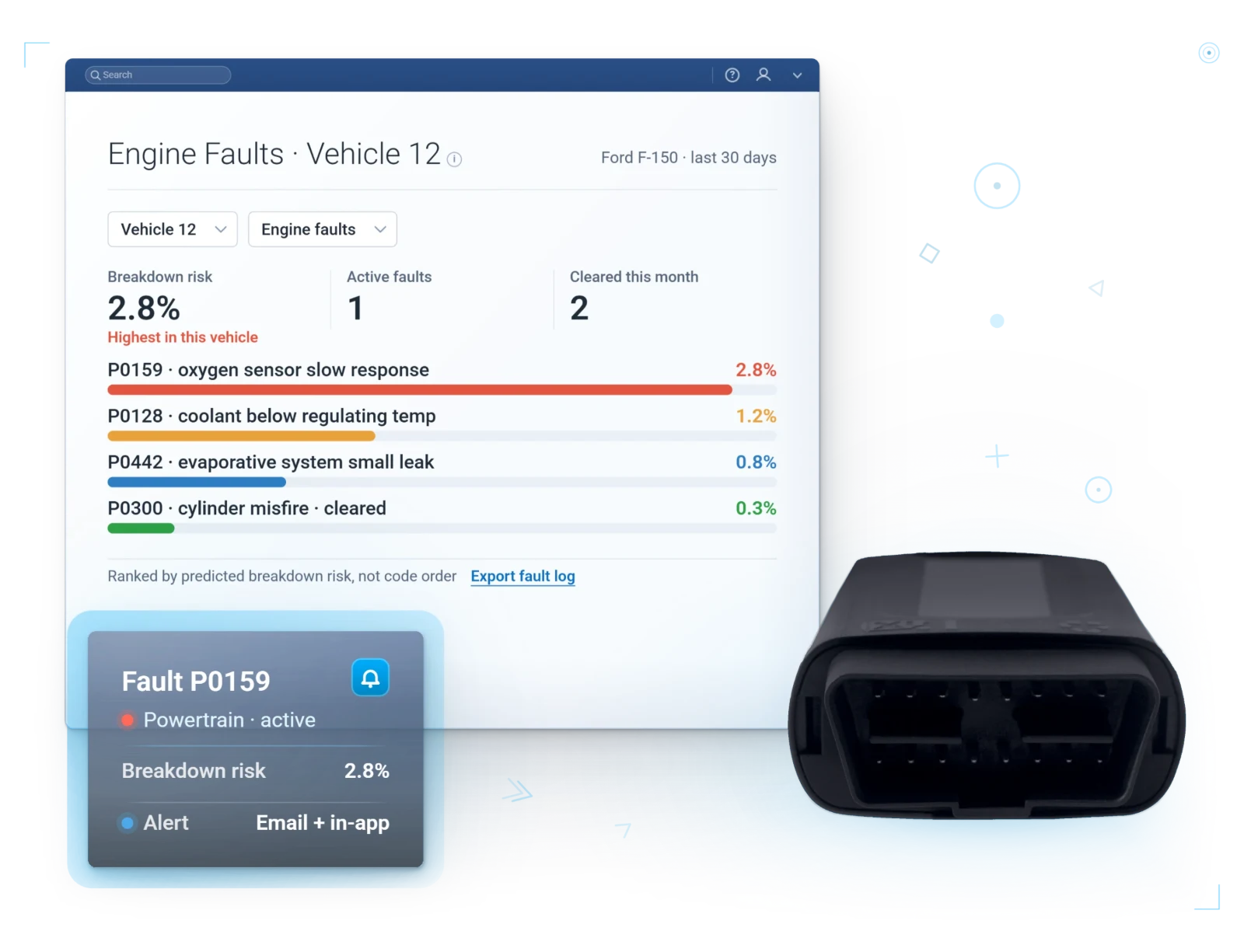
Patterns surface too. Fault Lifecycles show persistent faults and patterns, like the same code recurring across one model year, so the shop plans one fix across every affected unit instead of meeting the problem one tow at a time. Tire pressure alerts fire only when pressure is truly critical, not every cold morning, so the shop chases risk, not noise.
When a breakdown still happens, help comes through Geotab Roadside, powered by Agero, from a network of 30,000+ service providers across the US and Canada. The vehicle's live location fills in automatically, and dispatch and the driver watch the same live ETA. See how Geotab roadside assistance works.
Fleet Preventive Maintenance by Miles and Engine Hours
Calendar schedules service the truck that barely moved and miss the one that ran double shifts. Geotab reads odometer and engine hours from every vehicle and machine automatically, so reminders trigger on real usage, or by date when that fits.
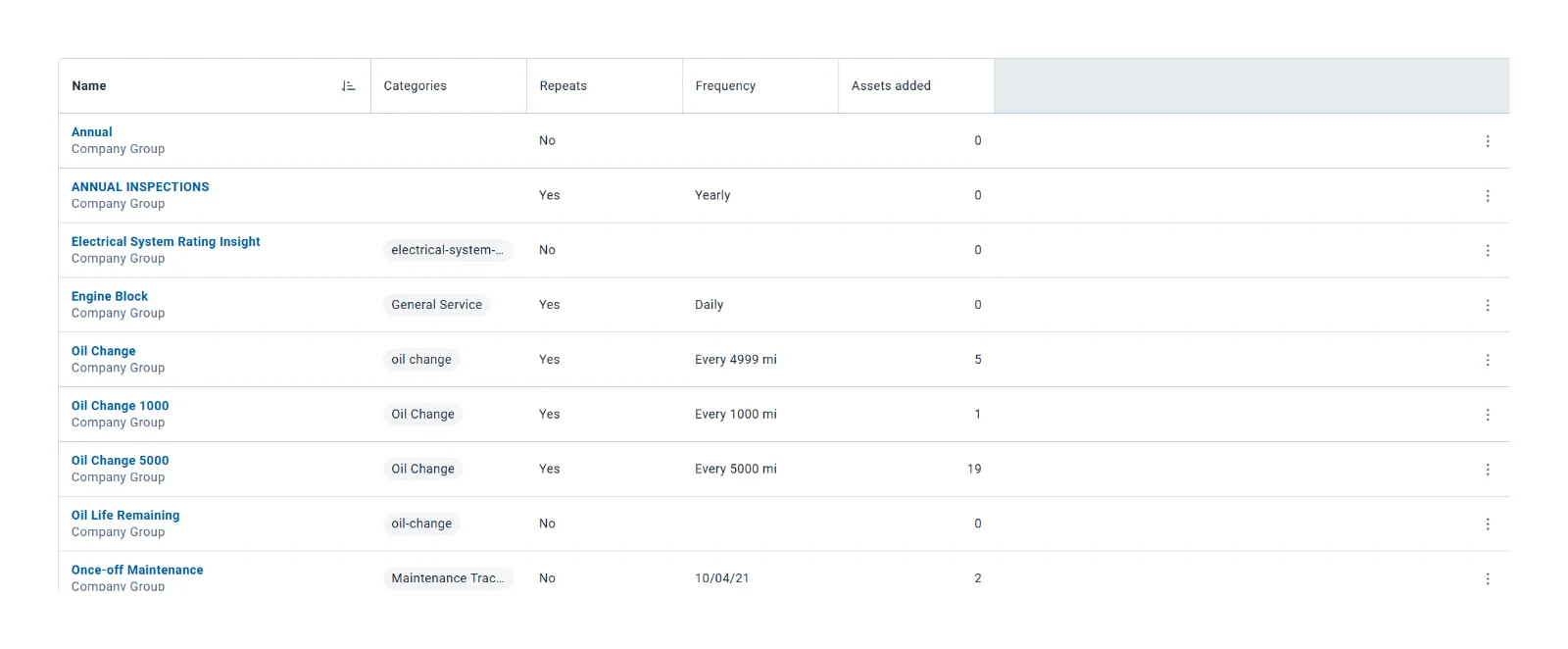
The right service is flagged before it is overdue, and nobody copies mileage off a clipboard. Oil life is estimated from real driving patterns, so the oil change lands when the engine needs it, not when the windshield sticker says. Registrations, inspections and certifications carry reminders too.
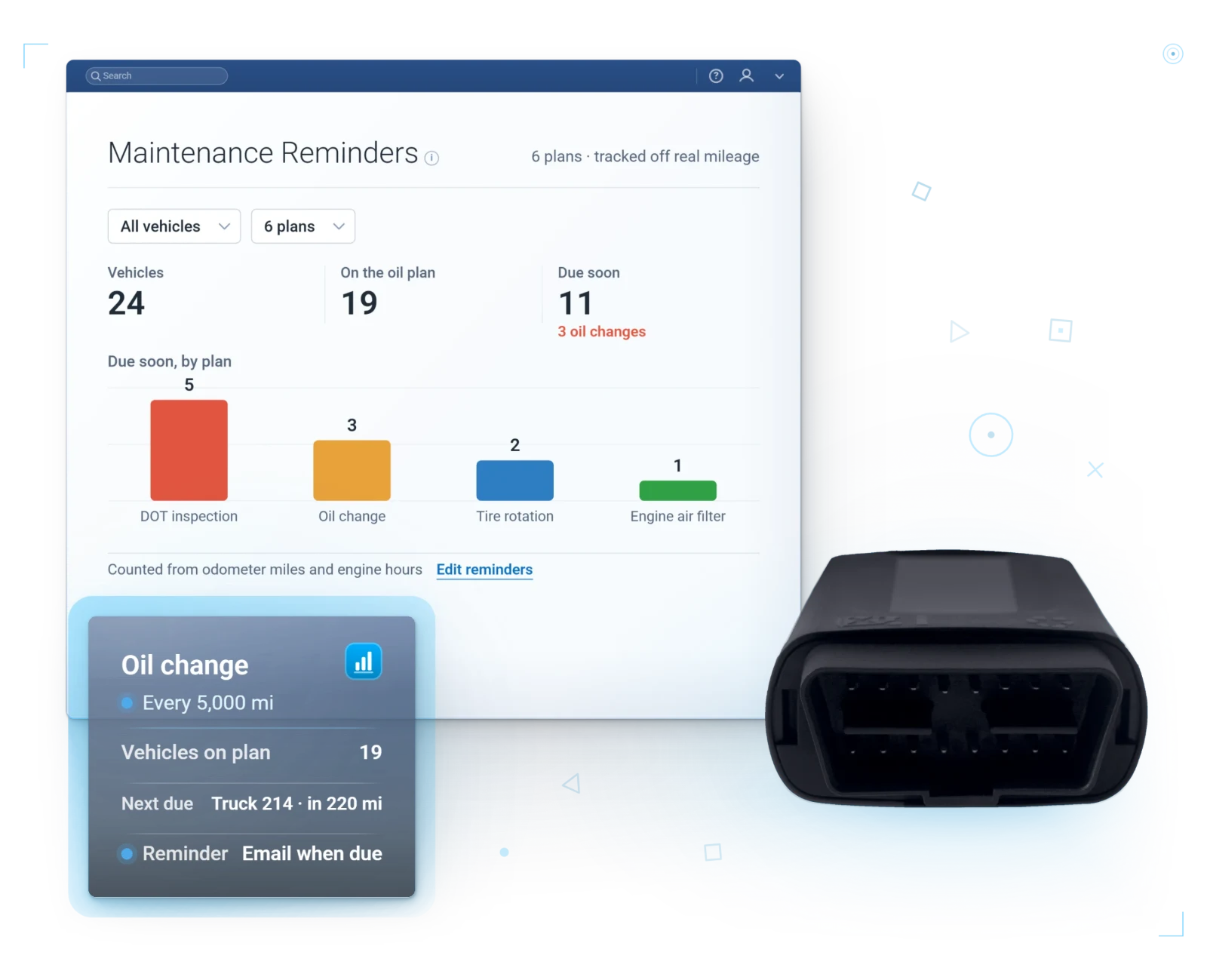
See every health signal, schedule and work order on our Geotab fleet maintenance software page.
DVIR Defects and Work Orders in One Place
Drivers see problems first. In the Geotab Drive app, they complete inspections on their phone with photos and notes, and defects reach the shop with no paper to chase.
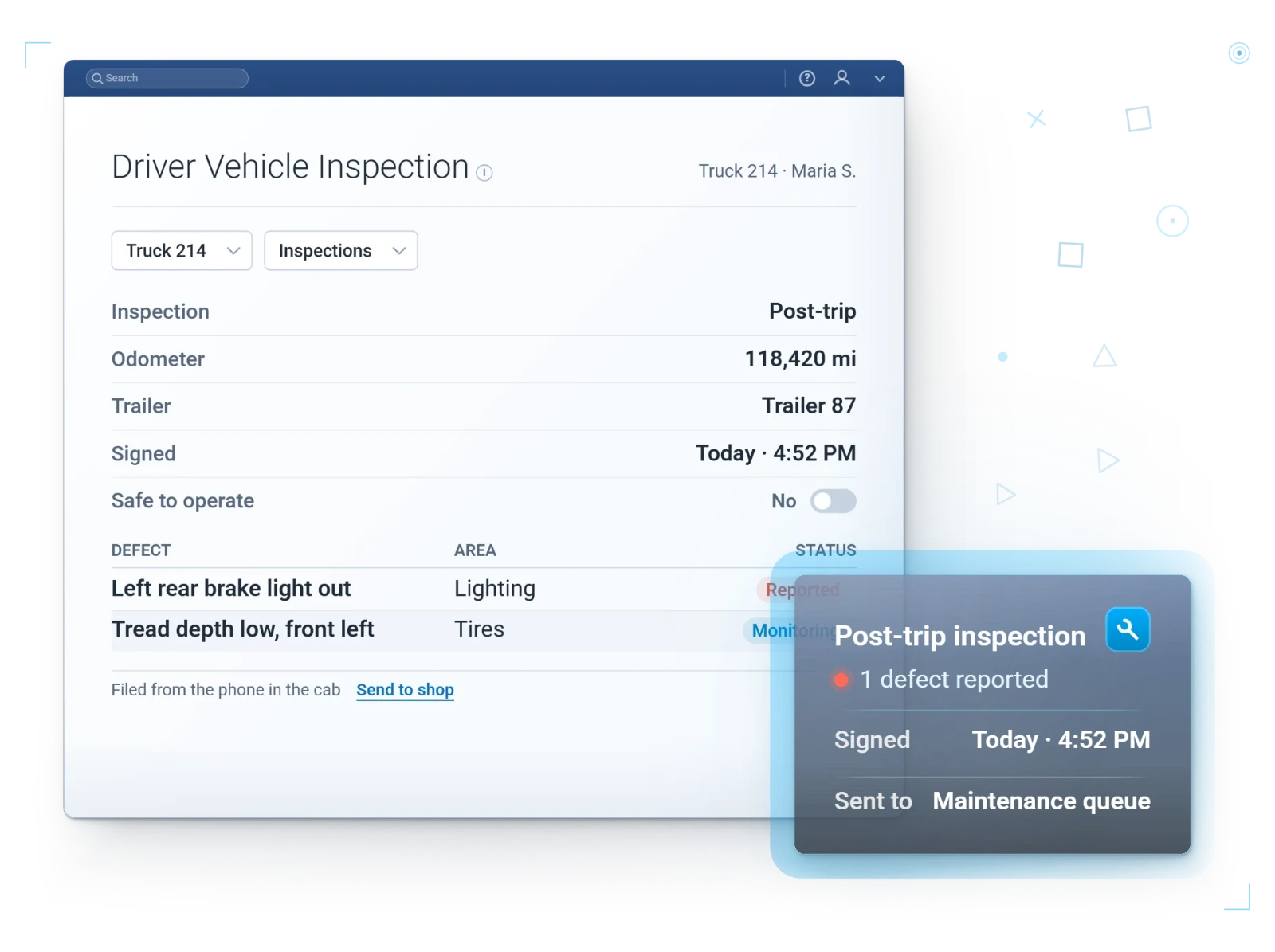
The inspection is built into the shift. Clock in and the app assigns the vehicle and walks the pre-trip; log out and it closes with a post-trip. Drivers also see odometer, engine hours and battery voltage for the assigned vehicle, right in the app.
Work orders are opened, assigned and closed beside the data that raised them, with notes, photos and costs on the record. The technician starts with the whole story instead of a scribbled note.
Across connected fleets, repair speeds improved by up to 25% year-over-year. With the defect, the fault and the work order in one system, your technicians spend the day on trucks, not on paperwork.
One client summed up the inspection side in a single line:
“The pre-trip and post-trip inspection reports have been invaluable.”Petrey Novelty Inc, Luverne, AL
Fleet Maintenance Cost and Downtime, Measured Per Vehicle
A vehicle in the shop earns nothing while its fixed costs keep running. Downtime Detection shows the hours each vehicle was actually unavailable, a real downtime cost per unit.
Labor, parts and vendor costs per order roll into per-vehicle history, so repair-versus-replace is arithmetic. You see which units cost the most and which are next, so replacements are planned instead of forced by a breakdown.
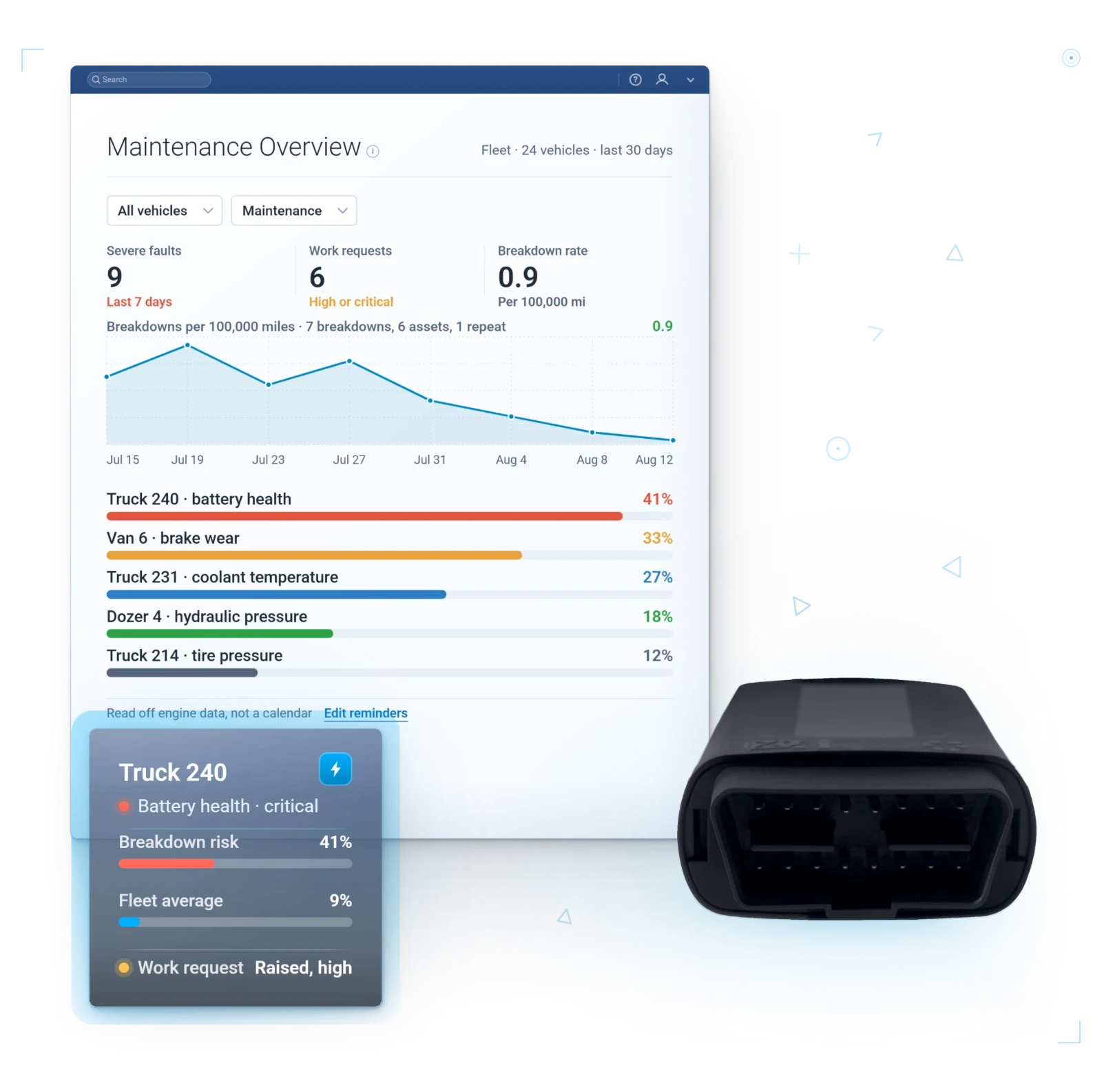
When the maintenance budget goes up for approval, it now rests on numbers pulled straight from the vehicles.
Fleet Maintenance Reports in MyGeotab, Screen by Screen
A maintenance return only counts when someone can point to it. These are the MyGeotab screens where the number lives, and who reads each one:
- Engine fault alerts: the alert email reaches the shop the moment a code sets, before the driver notices anything. The shop lead starts the day here.
- Vehicle health view: battery, odometer and diagnostics for every unit on one screen, with Risk of Breakdown on each active fault. This list decides which truck gets the next open bay.
- Service reminders: due dates surface automatically and flag before they slip, so nothing rolls past its interval. This is the maintenance planner's week.
- Work orders and cost trends: labor, parts and vendor spend trended per vehicle, so budgets rest on history. This is the screen finance asks about.
- Downtime Detection: the hours each vehicle was actually unavailable. Operations reads it, because those are hours the vehicle earned nothing.
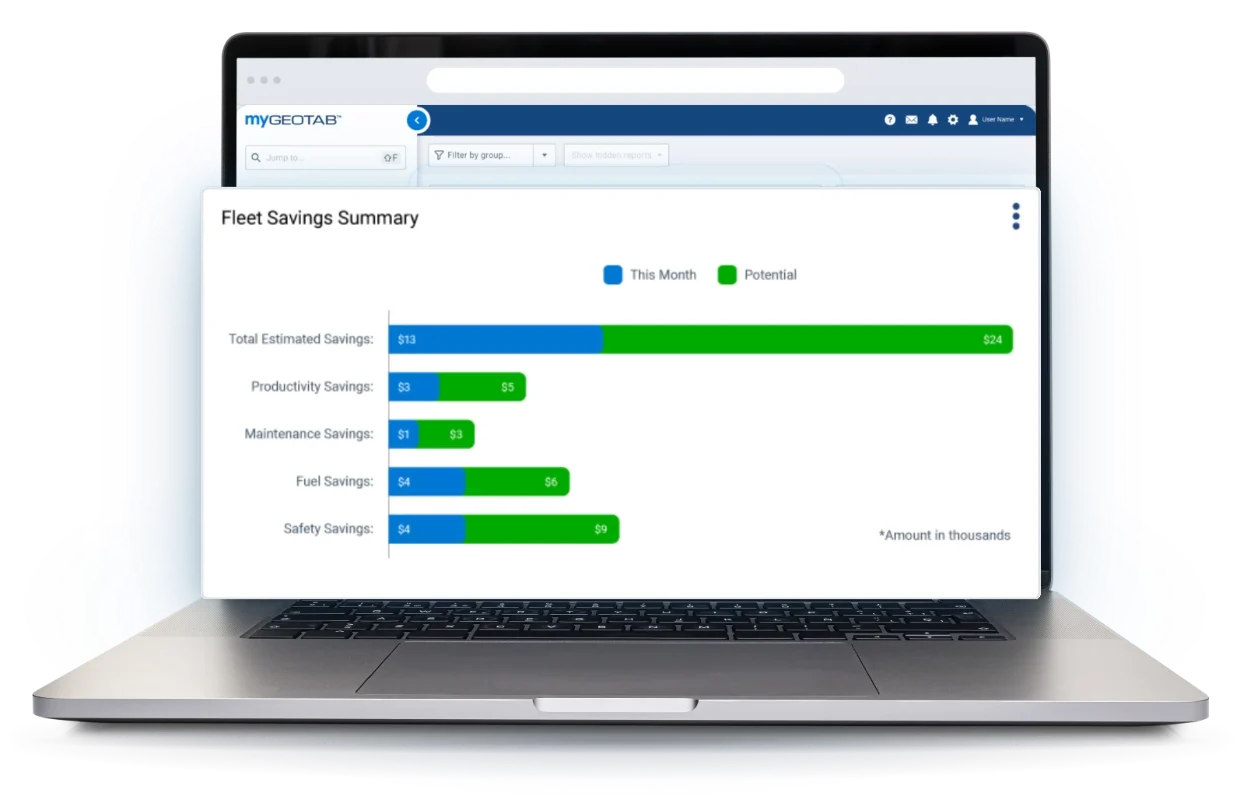
Then put the numbers on a schedule. Geotab Scheduled Reports email maintenance due and other ready-made reports daily, weekly or monthly, and each recipient can be filtered to their own group. The people who approve the budget see the same numbers, in the same format, without logging in.
Mixed Fleet Maintenance for Vehicles and Heavy Equipment
Most large fleets run more than one kind of asset. Cars, vans and trucks carry Geotab GO9 or Next-Gen GO10 trackers, which read faults, odometer and engine hours straight from the vehicle.
Heavy equipment runs on GO Rugged, sealed against mud, dust and pressure washing and mounted on machines with nowhere to plug in. Real engine hours land automatically, so excavators, loaders and dozers are serviced on hours run, not a date someone guessed.
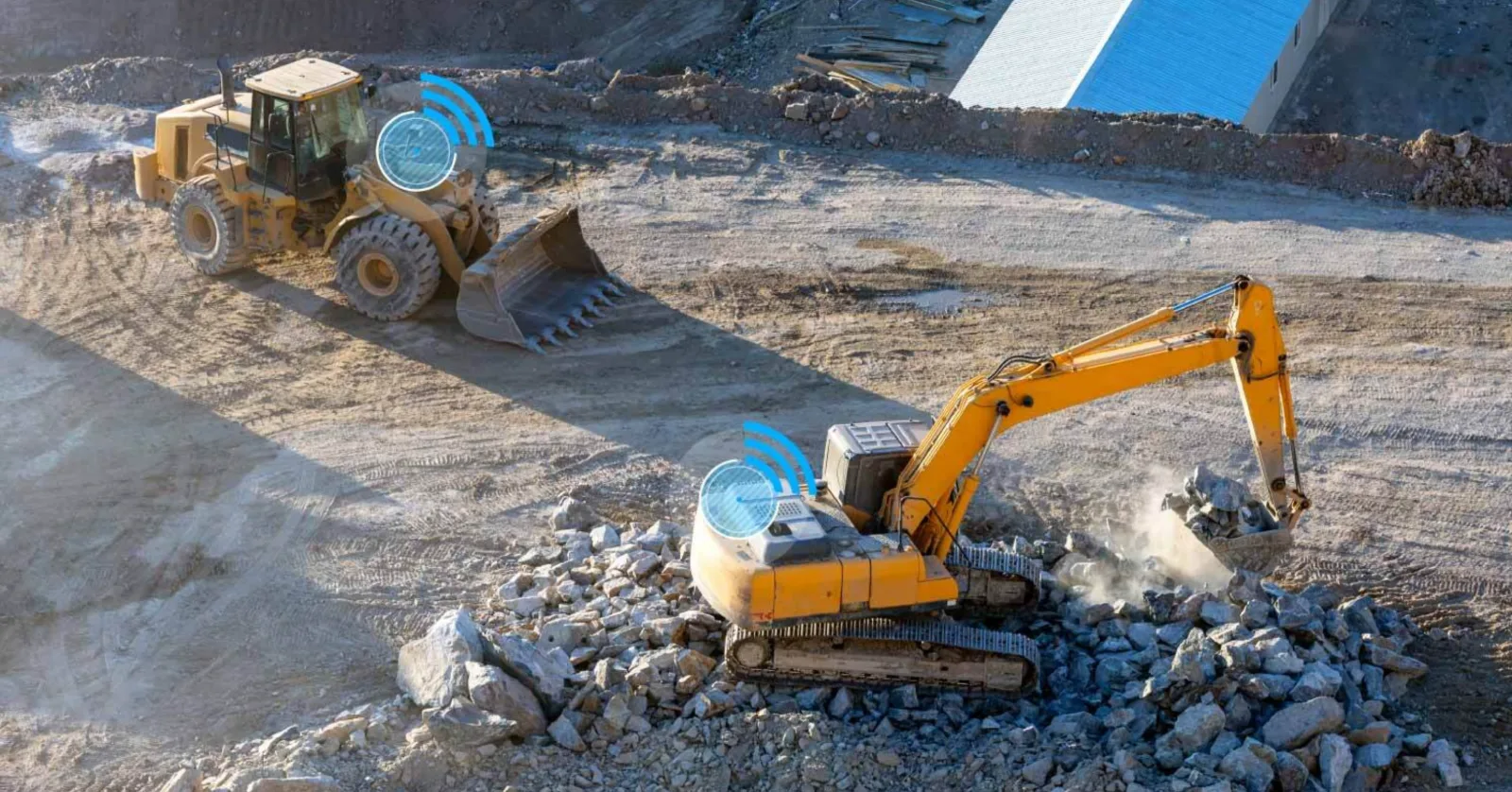
From the office, a supervisor triages a machine's fault and clears or schedules it without driving out to the site. Each machine keeps one history: reminders, work done and faults beside location.
Trailers carry GO Anywhere, on one battery, with nothing to wire or recharge. With no engine to read, their maintenance runs on dates: inspections and registrations carry reminders, and the shop finds the trailer on the same map when the date comes up.
Every unit reports into the same maintenance workflow on one screen, so the shop plans the whole yard from one list. See how GO Rugged handles heavy equipment GPS tracking, hours and faults.
Multi-site operations add one more layer. One MyGeotab account carries every depot. Each regional manager sees the units in their own territory, and leadership sees all of them with one login. Set the yards side by side and the one with the most overdue service, or the most downtime, stands out. Read how multi-site fleets roll out Geotab, one depot at a time.
Fleet Maintenance Habits That Keep Repairs in the Bay
The data starts flowing the moment a device reports. The return depends on what the shop does with it. Five habits keep repairs in the bay:
- Give every fault alert an owner. Engine fault alerts go to the person who books the bay, not to a shared inbox nobody reads.
- Work the list from the top. Pull in the fault most likely to end in a tow first, not the truck whose driver complains loudest.
- Retire the calendar schedule. Once odometer and engine hours arrive automatically, move intervals to real usage, so the truck that barely moved stops coming in early.
- Close every work order with its costs. Without labor, parts and vendor costs on the record, repair-versus-replace slides back to guesswork.
- Count downtime beside the repair bill. A truck waiting on a part costs money every hour it sits, and those hours belong in the same report as the invoice.
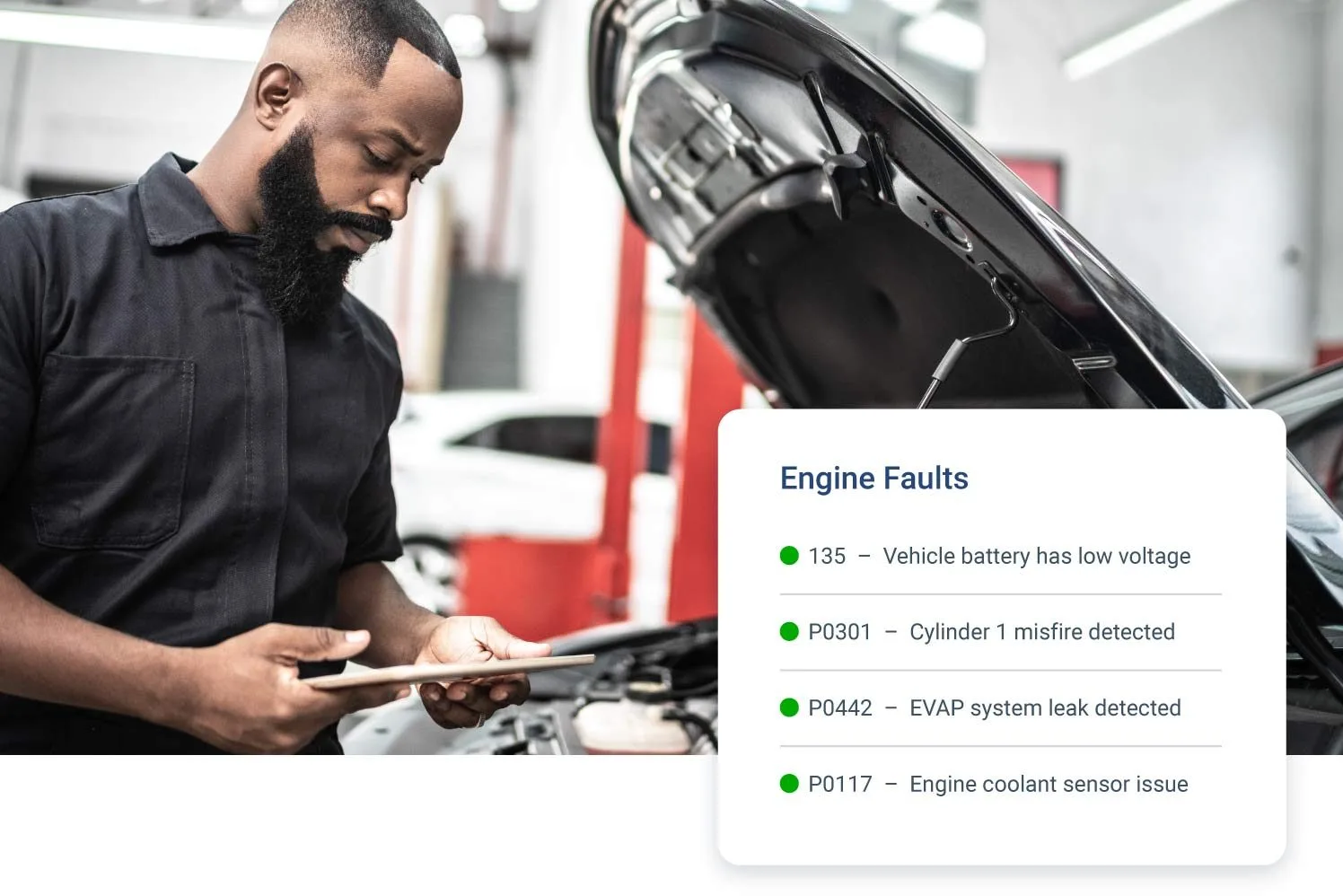
Each habit is a setting or a routine, not a new purchase.
Getting Fleet Maintenance Software Approved
Finance asks two questions about any fleet program: what will it change, and how will we know? A maintenance request that answers both carries four things:
Pull last year's tow bills, roadside calls and emergency repair invoices. That total is your reactive spend, in your own numbers.
Set that total beside the research at the top of this post. The outside figures frame the gap; your invoices size it.
Readings from a free demo device, described below, turn the research into evidence from your own fleet.
Name the measures up front: overdue service, downtime hours, and labor, parts and vendor costs per vehicle, sent to the approvers on a scheduled report.
What reactive maintenance costs compared with preventive maintenance
See the Maintenance Return on Your Own Vehicles
Maintenance is one line of the return. Idling is another, and you can price it yourself: put your own fleet size, pump price and idling target into the idling calculator on our fleet fuel management and cost savings page.
The maintenance side is best judged on your own trucks. Start with a free demo device on your own vehicles. We configure your demo device before it ships, and it ships within 72 hours. Vehicle trackers are Plug-N-Play, so your own crew installs them, with no installer to schedule and zero downtime.
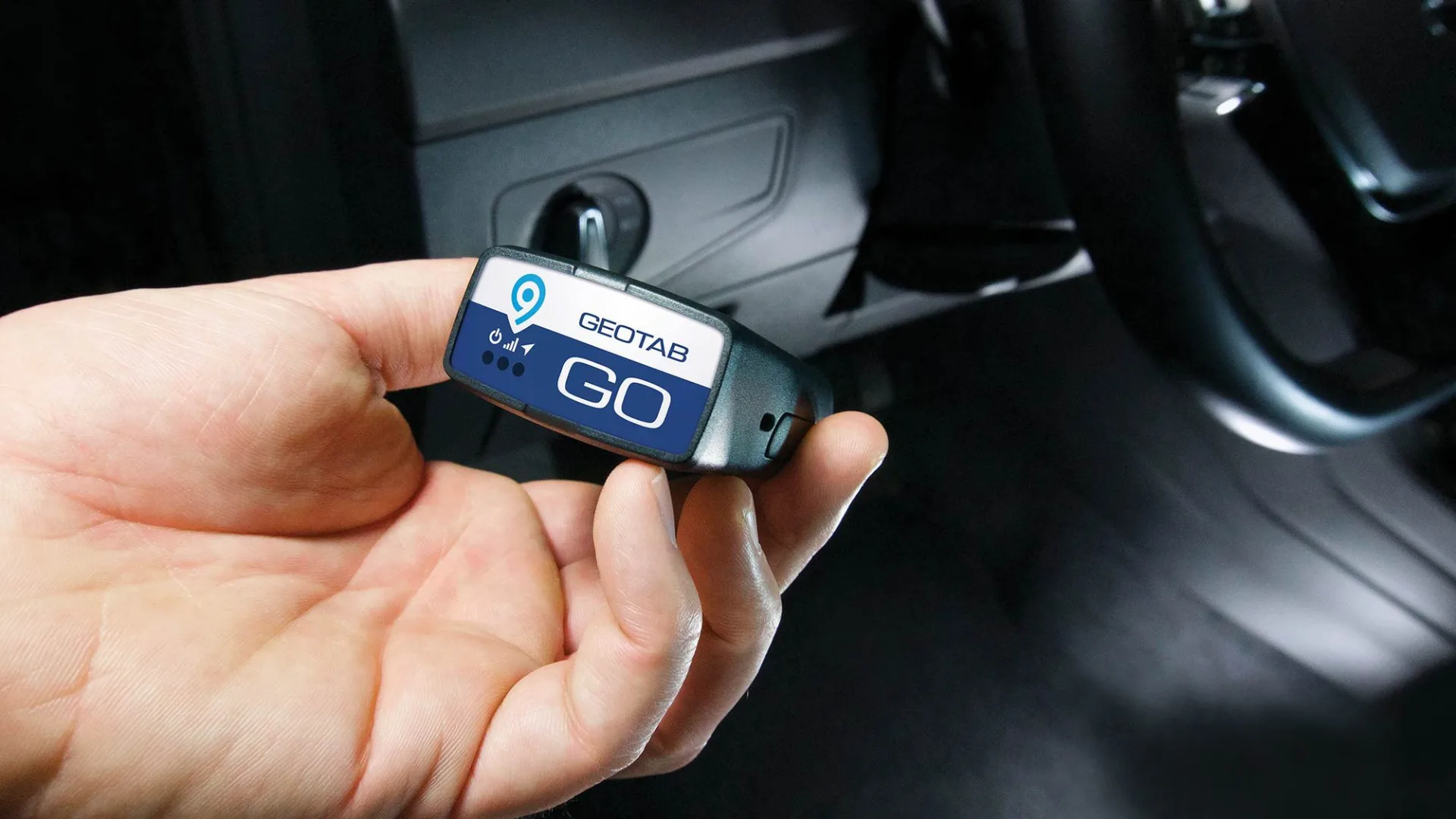
Put the demo device on one of your oldest, hardest-working trucks, then watch four things: the active faults and the Risk of Breakdown on each, the battery health score, odometer and engine hours arriving with nobody writing them down, and the fault alert landing in the shop's inbox the moment a code sets. Our post on what to expect from your free Geotab demo walks through each step.
Before the first device ships, we build your groups, zones and rules, and we stay on the phone until every device reports. Our dedicated U.S.-based team answers in minutes, we have served fleets since 1999, and once you sign, the Fixed Pricing Guarantee locks your price for the rest of the contract.
FAQ
How does Geotab lower fleet maintenance cost?
Geotab lowers fleet maintenance cost by moving repairs from the roadside to the bay. Engine faults reach the shop as they happen, ranked by breakdown risk, and service runs on real miles and engine hours. That matters because reactive maintenance costs 2 to 5 times more than preventive maintenance (McKinsey & Company).
Should fleet preventive maintenance run on miles, engine hours or dates?
Use whichever fits the asset, and mix them in one fleet. Vehicles on GO9 or Next-Gen GO10 trackers report odometer miles and engine hours, heavy equipment on GO Rugged reports real engine hours, and trailers with no engine run on dates, as do registrations and inspections. Miles and hours arrive automatically, so those reminders trigger on real usage, not a guess.
How does Geotab measure fleet downtime?
Downtime Detection shows the hours each vehicle was actually unavailable, a real downtime cost per unit. Labor, parts and vendor costs per order roll into the same per-vehicle history, so a breakdown is counted in hours off the road as well as on the invoice.
Which warning signs does Geotab catch before a breakdown?
Engine fault codes reach the shop the moment they set, each with a Risk of Breakdown percentage showing how likely it is to end in a tow. Battery health is scored out of 100, tire pressure alerts fire only when pressure is truly critical, and Fault Lifecycles show the same code recurring across one model year.
Which MyGeotab reports show fleet maintenance ROI?
Five MyGeotab views show it: engine fault alerts, the vehicle health view, service reminders, work order cost trends and Downtime Detection. Geotab Scheduled Reports then email maintenance due and other ready-made reports daily, weekly or monthly to the people who approve the budget.
How do I justify the cost of fleet maintenance software?
Justify it with your own numbers. Pull last year's tow bills, roadside calls and emergency repair invoices, set them beside the research on reactive maintenance, and add readings from a free demo device on your own trucks: active faults, the Risk of Breakdown on each, and battery health. Then name how the return will be reported: overdue service, downtime hours and per-vehicle costs on a scheduled report.