When the shop knows before the driver
Proactive service planning in Geotab reduces breakdowns and keeps assets earning.

Maintenance is one of the largest controllable line items in a fleet budget.
Uptime
Odometer and engine-hour data flow in automatically, so schedules stay honest.
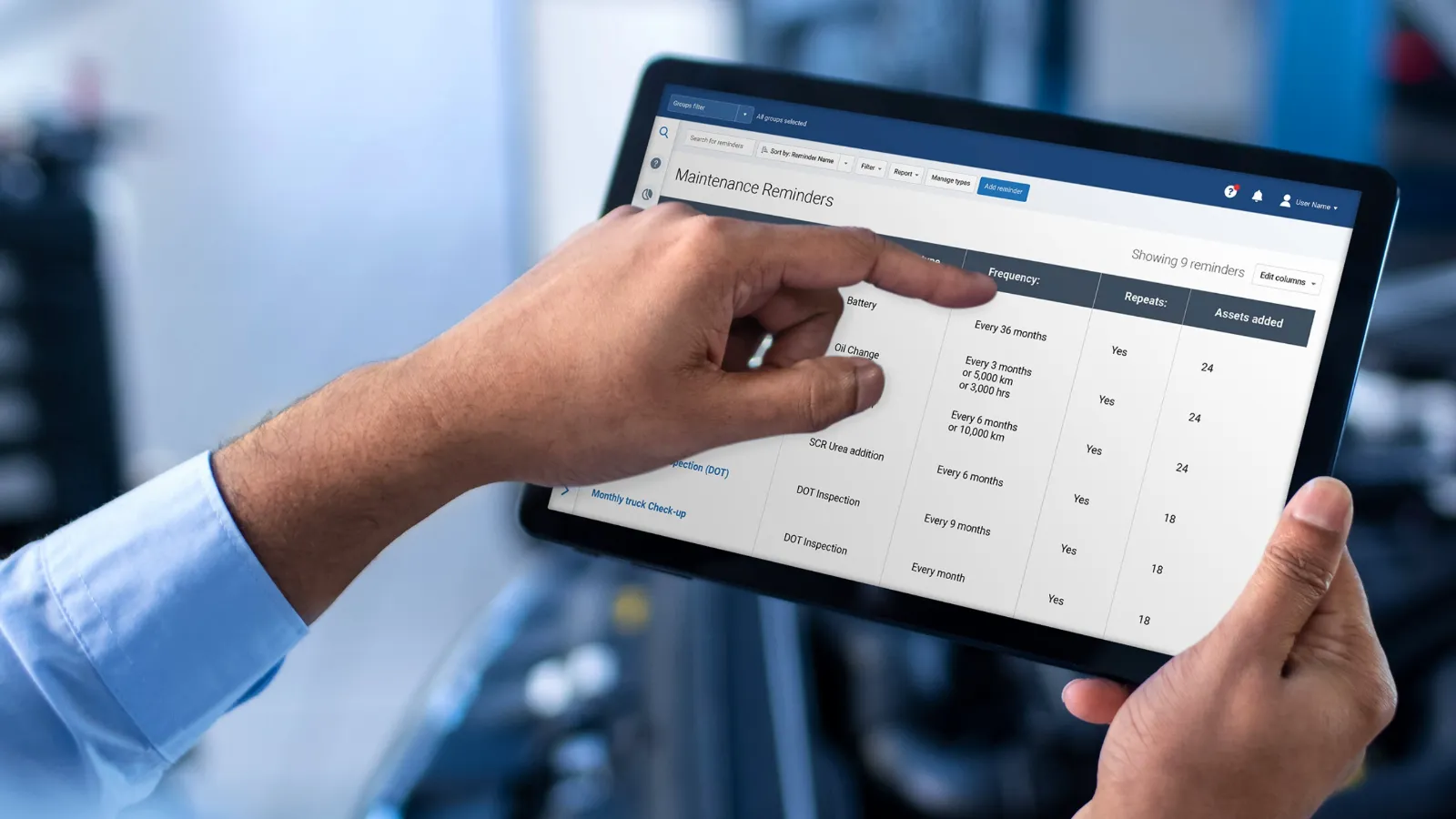
Service by actual miles and engine hours, not calendar guesses.
The right service, flagged before it is overdue.
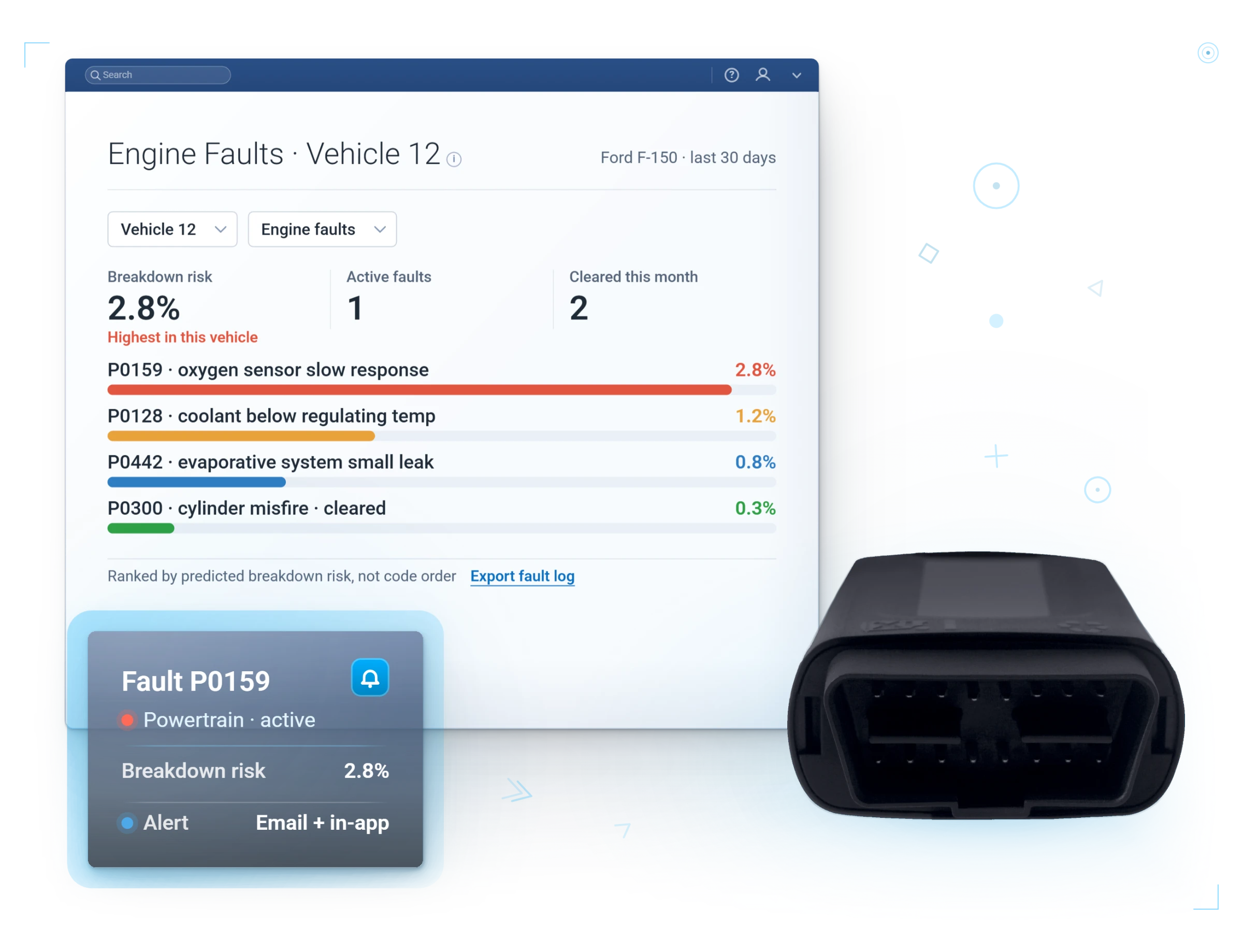
Engine faults surface immediately with context.
See which units cost the most and plan replacements with data.
What Changes
The Vehicle Grades Itself
Geotab's maintenance analytics score each vehicle from its own data, so the shop works from evidence instead of hunches.
Battery and charging health scored 1 to 100, so the weak battery gets replaced in the bay in October, not jumped in a parking lot in January.
Engine data and driving patterns estimate the actual date the oil change is due, so intervals fit how each vehicle is really driven.
A percentage on this fault, this vehicle, this likely to end in a tow.
Baselines built from fleet-wide data mean alerts fire only when pressure is truly critical, not every cold morning.
Calculates the hours each vehicle was actually unavailable from unplanned maintenance, so you finally have a real downtime cost per unit.
Identifies the persistent faults and fleet-wide patterns, like the same code recurring across one model year, before it becomes five identical repairs.
From Fault To Fixed
A fault fires, an inspection flags a defect, or a schedule comes due. Any of the three can open a work request in MyGeotab.
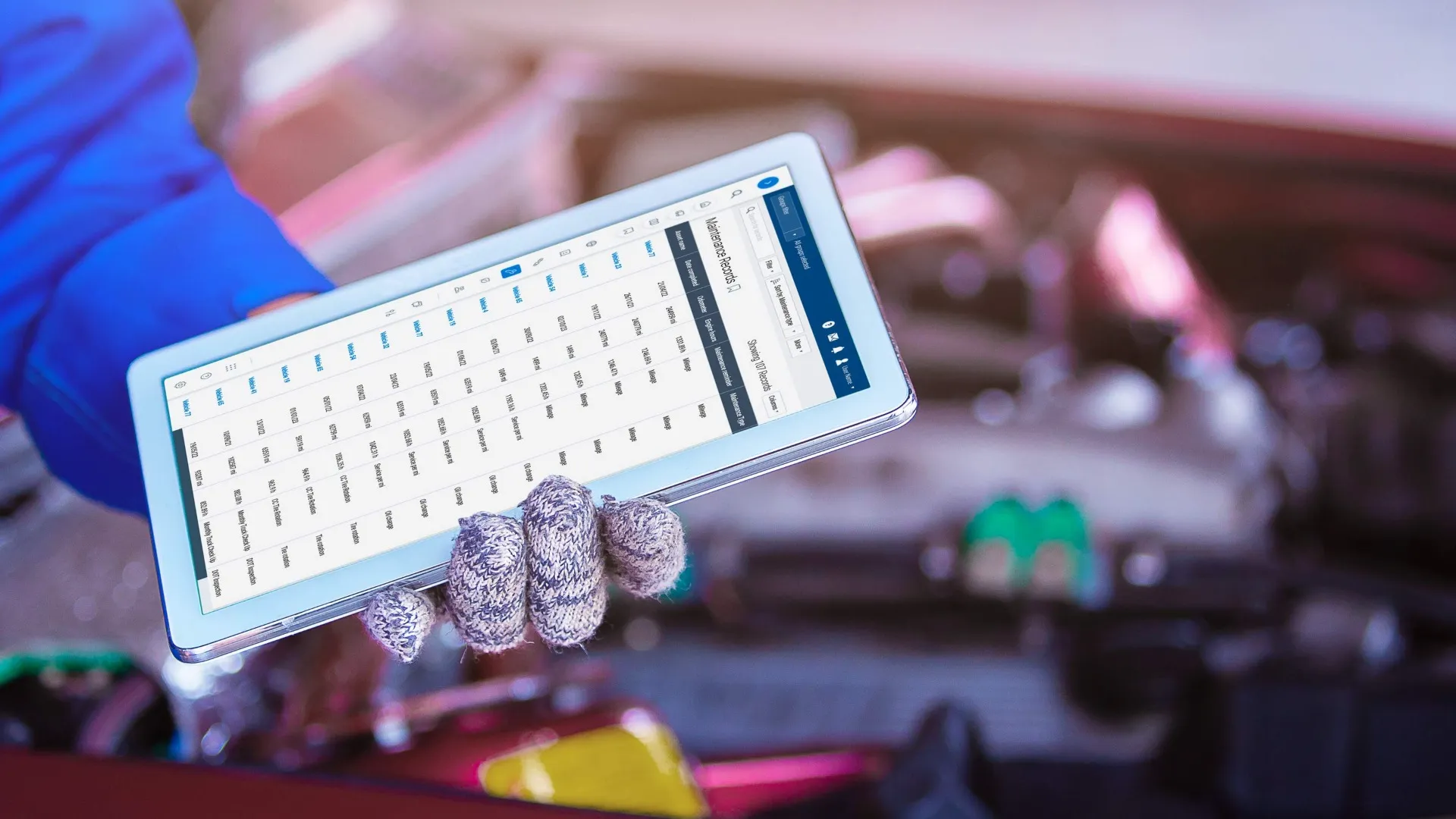
From there it becomes a work order: job type, due date, assignment, closed by the mechanic with notes, photos, and costs attached. The payoff is a searchable repair history that holds up in audits, and cost trends that finally answer fix-or-replace. When a breakdown still happens, roadside assistance dispatches to the vehicle's exact location through a network of 30,000+ service providers, the largest in the US and Canada (Maintenance 101, 2025).
Heavy-duty note. The same schedule engine covers refuse trucks and yellow iron on GO Rugged; the FAQ below covers what heavy-truck fault data looks like.
A closer look
Every vehicle reports its own condition, so service is planned instead of reactive.
Questions
Odometer and engine-hour data stream from the GO device automatically, so reminders trigger on real usage instead of calendar guesses. You can also set intervals by date when that fits better.
Yes. Diagnostic trouble codes surface in MyGeotab with context the moment they occur, so you can act before a small issue becomes a roadside breakdown.
Yes. Light-duty, heavy-duty, and equipment on GO Rugged all report into the same maintenance workflow in one platform.
A percentage estimate that a given active fault will end in a breakdown, computed from fault-and-outcome patterns across Geotab's connected vehicles. It turns a wall of codes into a triage list.
Yes. Labor, parts, and vendor costs per order, rolled into per-vehicle history. That is how repair-versus-replace stops being a debate and becomes arithmetic.
Useful. J1939 faults come with plain-language descriptions and severity on standard plans, and premium Noregon tiers on the Marketplace add recommended repair actions and real-time diagnostics when you want them.
Yes. Registration and license renewals, inspections, certifications: anything with a date can carry a reminder, alongside the mileage and engine-hour intervals.
Keep exploring
Inside MyGeotab
Breakdown rate, downtime, and the assets that need attention first.
Illustrative MyGeotab screen with fictional data
We will load your fleet and service intervals during a free demo so you can see the schedule build itself.