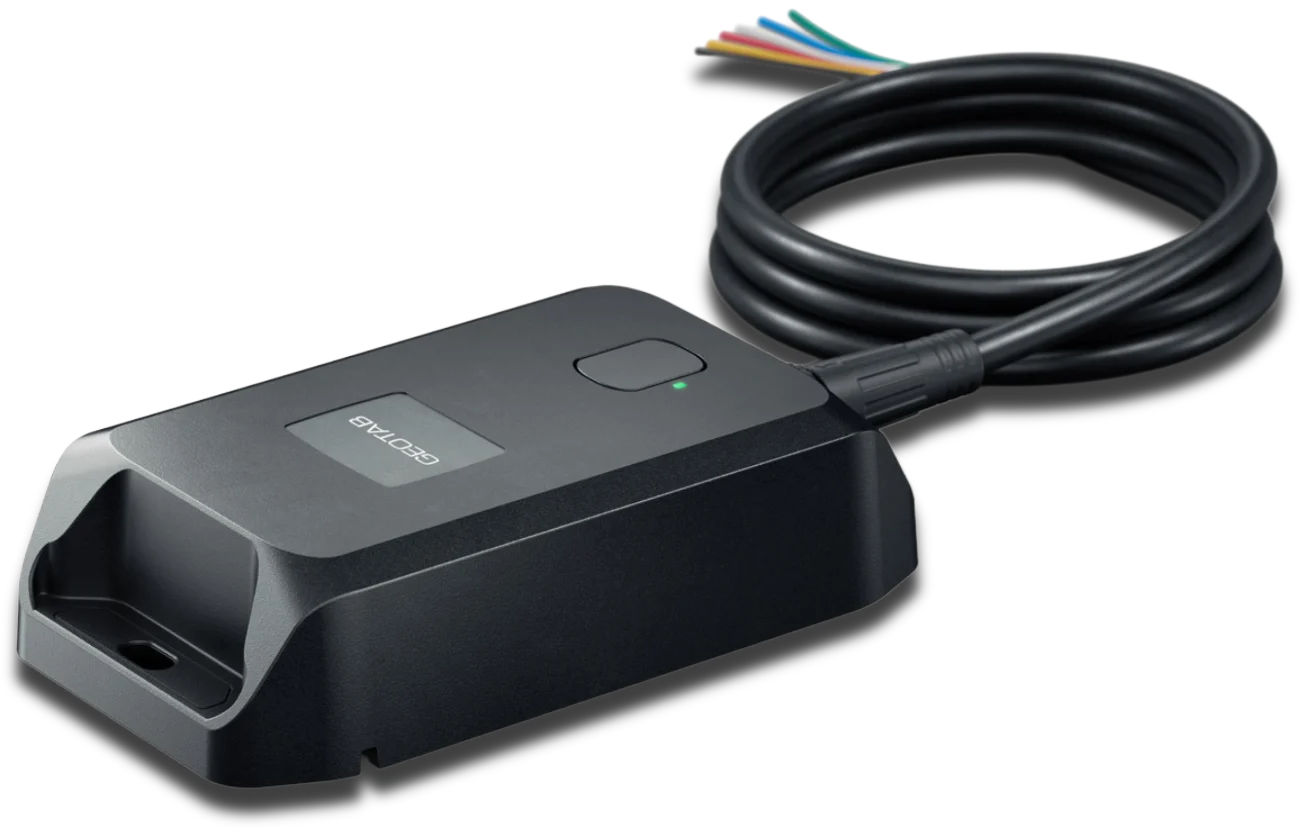
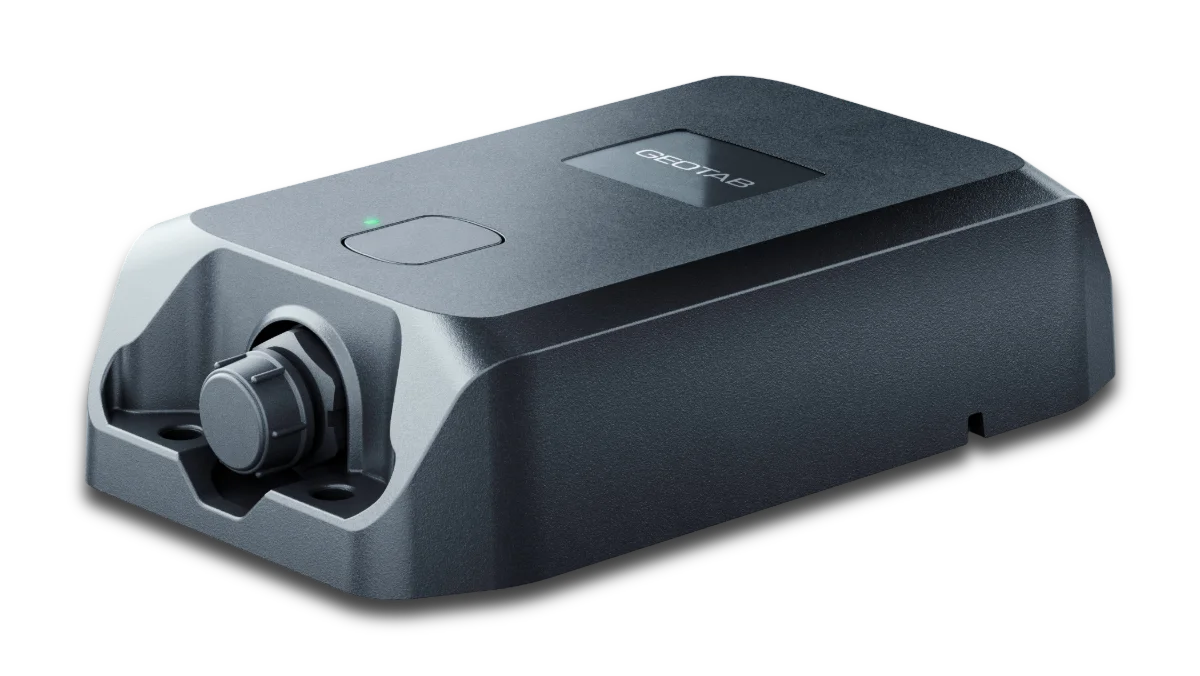
The premium asset tracker
A hybrid tracker with wired power, engine hours, and satellite connectivity where cellular ends.

What it does
Wired to the asset, it stops answering "where is it" and starts answering "is it earning."
Engine hours, ignition state, and distance traveled (an inferred odometer) when wired, feeding maintenance and billing.
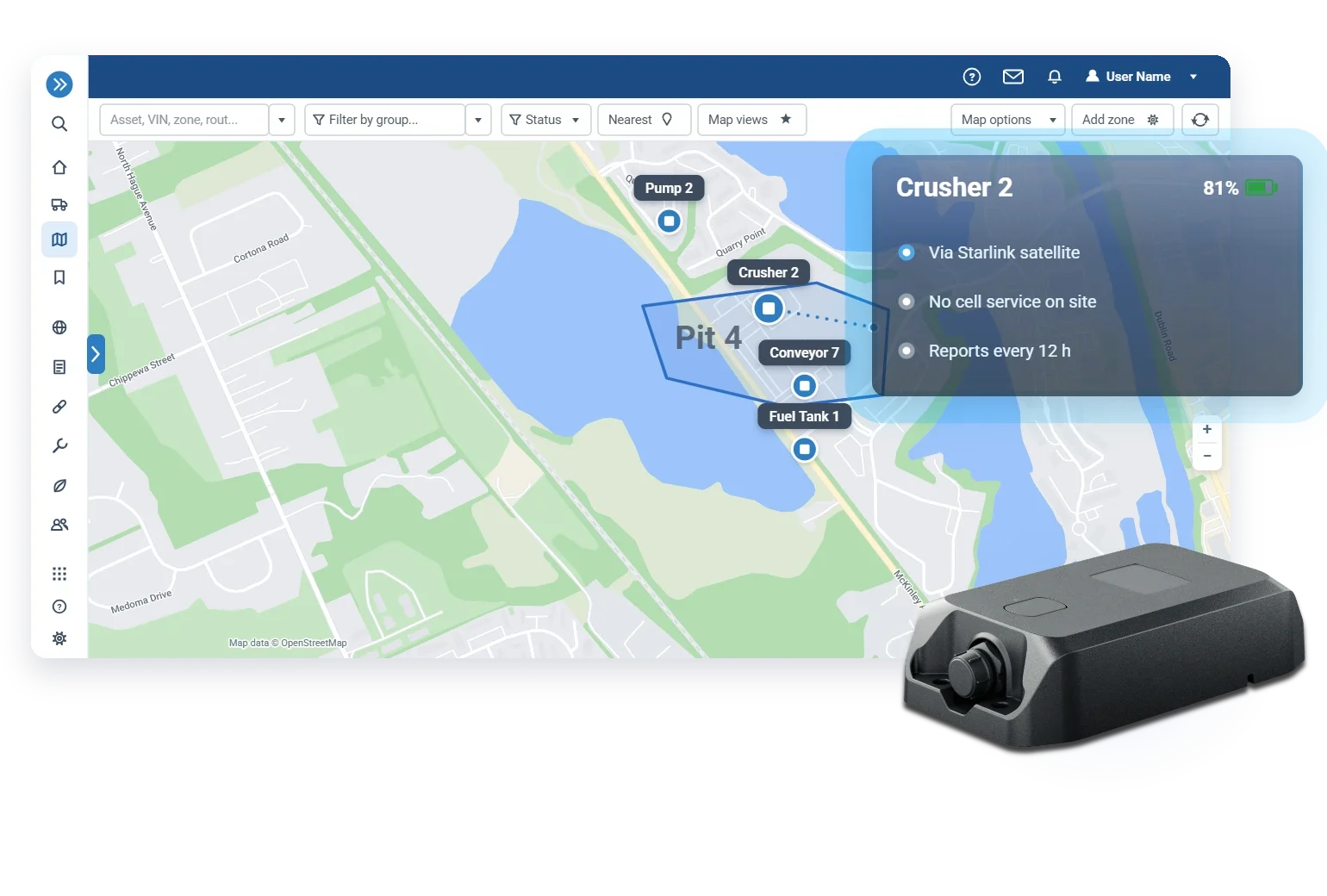
Remote assets keep reporting past the cell map, with no gap in the record.
Dual-band GNSS for accurate positions, even in tough environments.
One trailer tracker doubles as the reader for the tagged small tools riding with it, so the little stuff needs no tracker of its own.
A field-replaceable backup battery keeps coverage from lapsing when the asset loses power.

Wired When It Matters
On battery it checks in on a schedule; wired to the asset, it steps up to near-real-time so you see moves as they happen.
A closer look
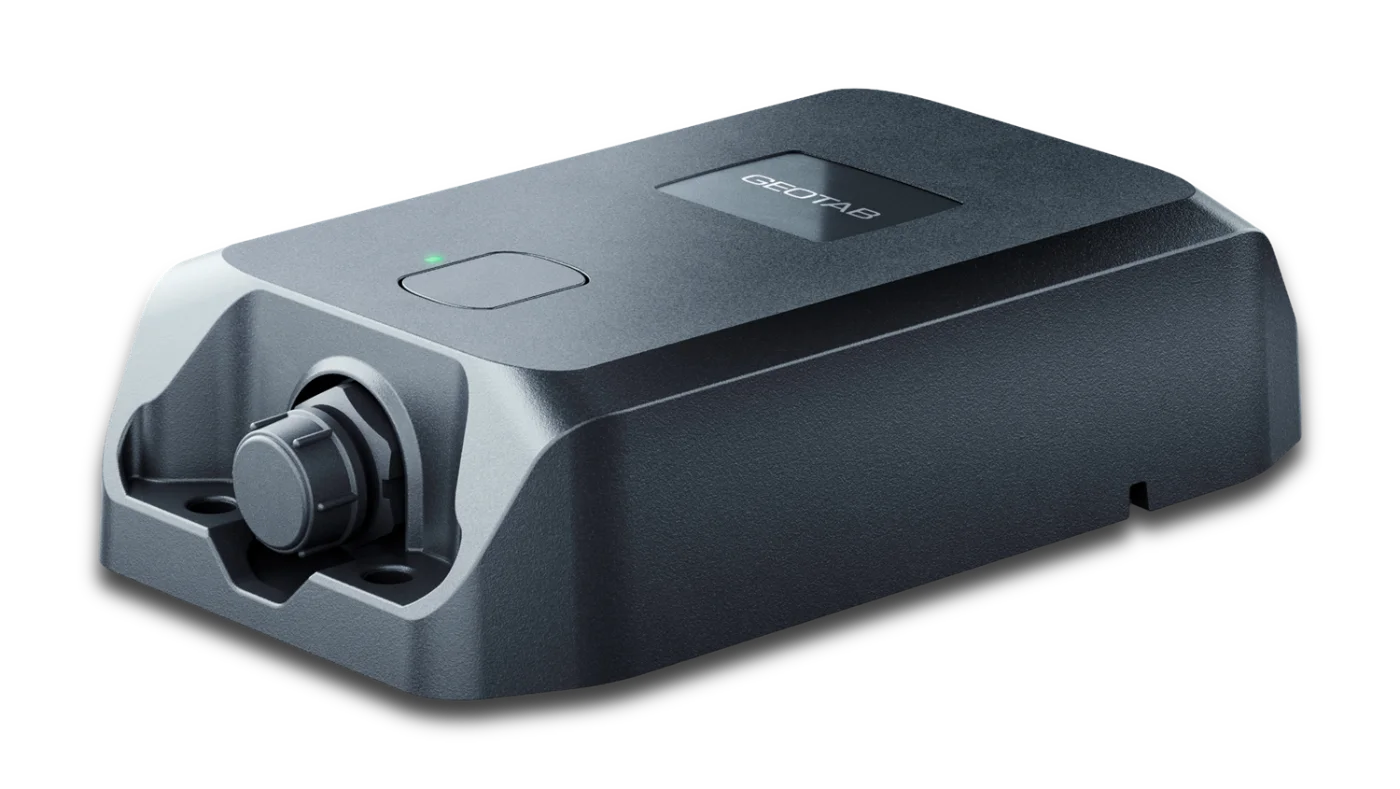
A hybrid tracker for the assets that deserve more than a dot on a map: wire it for near-real-time and engine hours, with satellite where cellular ends.
Wire it to asset power for a live feed, or run it on its own battery where there is nothing to tap.
Global 4G LTE (CAT1 bis) and Starlink Direct-to-Cell, in one sealed device.
Two GNSS bands hold an accurate position, even under canopy or between buildings.
A 5,400 mAh backup battery is field-replaceable, so the tracker outlives its first cell.
Reads external sensors and relays small-tool tags riding the same asset.
IP67 and IP69K sealed against dust, water, and wash-downs.
-40 to 85 C operating range. Reports into the same MyGeotab as the rest of your fleet.
The specifics
The wired, satellite-backed premium tier: near-real-time reporting and engine hours when powered, with a field-replaceable battery and Starlink coverage where cellular ends.
Wired power gives near-real-time location, backed by a field-replaceable battery so coverage never lapses.

Runtime and ignition data roll into MyGeotab maintenance reminders and utilization reports automatically.
Coverage follows the asset, not the cell map.
IP67 and IP69K rated, operating from -40 to +85 C for wellsites, freezers, and desert yards.
Power-saving modes stretch it, and wiring extends it further.
Acts as a gateway for small tool tracking and supports external Bluetooth sensors on the same asset.
Built for the far edge of the map
Wellsites, long rural hauls, and remote yards stop being blind spots.
Where cellular ends, Starlink Direct-to-Cell takes over, so a wellsite or backcountry haul keeps checking in instead of dropping off the map until it rolls back into coverage.
A field-replaceable battery and power-saving modes run for years, so a tracker at a distant wellsite does not need a truck roll to stay online.
Engine hours turn maintenance, warranty claims, and job billing into data instead of estimates. Reactive repairs run 2 to 5 times the cost of planned maintenance (McKinsey), at roughly $1,200 per breakdown (NPTC).
No-coverage behavior
Events queue on the device and forward encrypted the moment a connection is back.
Four reporting modes
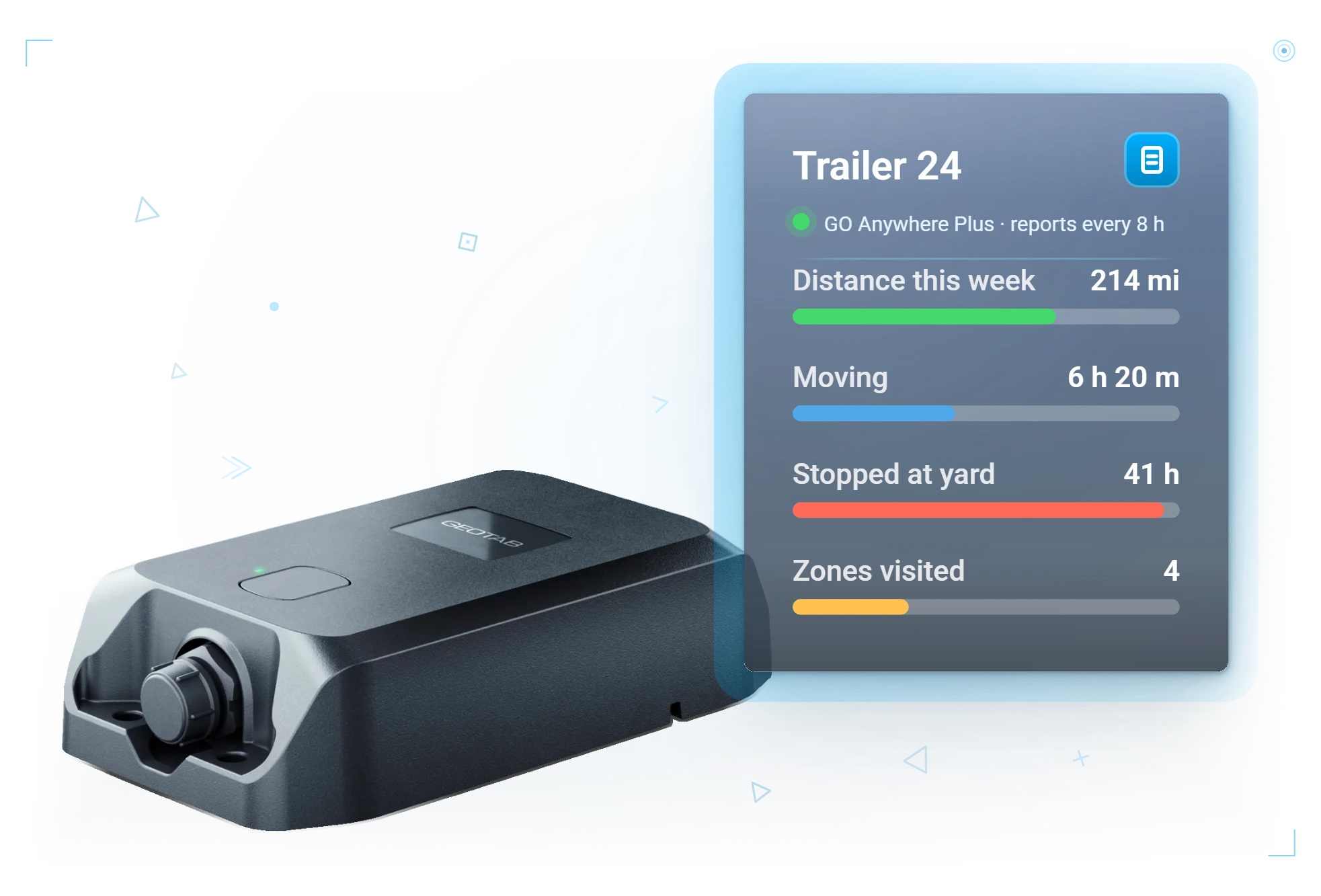
Fixed check-ins at 8, 12, 24, or 48 hours for assets that mostly sit. The yard-inventory mode.
Logs trips as they happen and uploads once a day. Cost-efficient utilization tracking with full history.
Near-real-time start and stop reporting for assets in active daily use.
A location every 15 minutes while in motion, auto-expiring after 72 hours. The theft-recovery mode.
Nobody becomes a battery accountant. We set the right mode per asset at rollout and change it as the job changes.
In MyGeotab
Daily check-ins for dormant equipment, live updates when things move.
In MyGeotab
Live, idle, or gone quiet: the whole yard in one list, each tracker showing charge and time since last heard, so nothing slips between deployments.
More Than a Dot
Wired in, GO Anywhere Plus sends back the readings maintenance actually schedules from — with every position report.
GO Anywhere PlusEngine hours, odometer, and battery voltage from equipment far off the grid.
Questions
Starlink Direct-to-Cell satellite connectivity picks up where cellular ends, so a tracker in a coverage hole keeps reporting instead of going dark and catching up later. For remote sites and long rural hauls, it removes the "no data since Tuesday" problem.
Near-real-time reporting plus machine data: engine hours, ignition state, and distance traveled. That is what turns a location pin into utilization, maintenance, and billing evidence.
Up to 5 years on battery with power-saving modes, longer when wired to the asset, and the 5,400 mAh battery is field-replaceable, so the tracker outlives its first battery.
Yes. GO Anywhere Plus acts as a Bluetooth gateway, so beacons on tools riding the same trailer report through it. See small tool tracking.
Keep exploring
See it tracking your own equipment before you commit. Request a free demo and a fleet telematics professional will reach out right away.