
New Year, Smarter Fleet: 8 Fleet Telematics Resolutions for 2026 (That You Can Actually Measure)
- GPS Fleet Management Solutions

- Jan 2
- 4 min read
Updated: Jun 7
January is when fleet reality shows up - budgets reset, KPIs get reviewed, and everyone wants “better” without adding more chaos.
The good news: if you’re running fleet telematics (GPS tracking + vehicle data), you already have the missing ingredient most New Year plans lack - MEASUREMENT.
No guessing. No “I think this is happening.” You can see it, trend it, and coach it.
Here are eight 2026 fleet telematics resolutions we’re recommending to our customers this month- because they’re realistic, measurable, and they move the needle on safety and cost.
1) Make speeding visible (and coach it early)
Speeding is one of those issues that feels “normal” until it becomes expensive. Use telematics to make it objective.
What to do in your telematics platform:
• Create a speeding rule (example: 10+ mph over posted limit for 30+ seconds).
• Review a weekly “Top Speeding Drivers” report - focus on trends, not one-off events.
• Coach using data: where it happened, time of day, and repeat locations.
• Recognize improvement publicly. Drivers notice what you measure… and what you celebrate.
Goal for January: Reduce total speeding events by 10–20% through coaching, not punishment.

2) Raise the seatbelt standard
Seatbelts are one of the simplest ways to prevent serious outcomes in a collision - and it’s also one of the easiest policies to enforce when you have visibility.
How telematics helps:
• Track seatbelt behavior when available through OEM data or integrated safety tools (varies by vehicle/equipment).
• Pair enforcement with education and clear expectations.
• Set the tone: “Seatbelt use is non-negotiable. We’re protecting you and the public.”
Goal for Q1: Build a seatbelt compliance baseline, then improve it month over month.

3) Coach harsh events, not personalities
The fastest way to ruin a safety program is to make it personal. Let the data do the talking.
What to track:
• Harsh braking
• Harsh acceleration
• Aggressive cornering
• Collision/near-collision indicators (when available)
How to coach it:
• Ask, don’t accuse: “Walk me through what was happening here.”
• Look for patterns: same intersection, same route, same time window.
• Fix the system too - sometimes the schedule is forcing the behavior.
Goal for February: Reduce harsh braking and acceleration events by 15% in your highest-risk group.

4) Stop paying for idle time
Idling is one of the quietest budget killers because it rarely shows up as a line item. Telematics makes it obvious.
Start simple:
• Track idle time by vehicle and by driver (engine on + zero movement).
• Separate “productive idle” (PTO work) from “waste idle” (warming up too long, waiting, habits).
• Set realistic thresholds and improve gradually.
Goal for Q1: Cut unnecessary idle time by 10%. You’ll usually feel that quickly in fuel costs and engine hours.
5) Turn maintenance into a schedule - not a surprise
Most fleets don’t have a “maintenance problem.” They have a “maintenance timing problem.”
Telematics helps you:
• Capture engine hours, mileage, and diagnostic fault codes.
• Trigger maintenance workflows earlier - before downtime hits operations.
• Identify repeat issues by vehicle type and spec.
Goal for Q1: Reduce unplanned downtime by catching “small problems” earlier.

6) Get serious about route discipline (without micromanaging)
Unauthorized use and “out-of-route” miles add up fast. The challenge is enforcing it fairly.
Use telematics to:
• Set geofences for yards, job sites, and service areas.
• Track route deviation patterns (not every detour).
• Flag after-hours movement for review.
Goal for January: Establish a clean baseline for out-of-route miles and after-hours usage.

7) Improve customer updates with real ETAs
Customers care about one thing: “When will you be here?” Telematics can answer that confidently.
What to implement:
• Live tracking + ETA visibility for dispatch/customer service
• Arrival/departure timestamps for proof of service
• Quick internal processes so customers get updates before they ask
Goal for Q1: Reduce “Where are you?” calls by making ETA updates proactive.

8) Automate reporting so managers manage (not chase spreadsheets)
If your supervisors are building reports, you’re paying them to do admin work - not leadership.
Set up:
• Automated weekly safety reports (by driver + by team)
• Automated idle and utilization reports
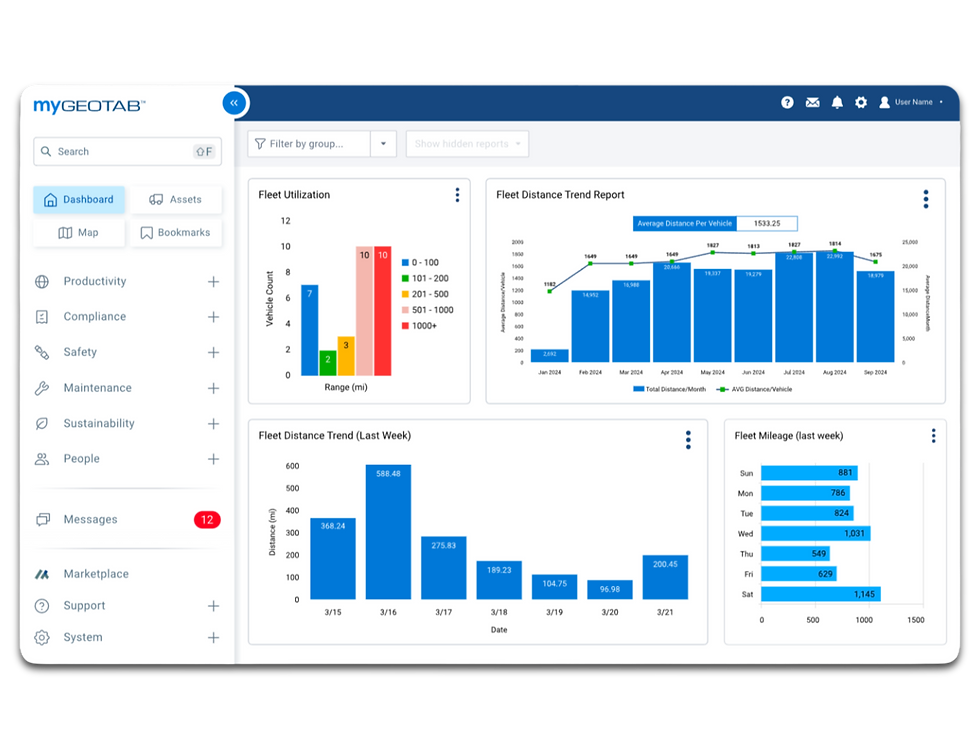
• Monthly leadership dashboard: safety, fuel waste, maintenance, productivity
Goal for Q1: Replace manual reporting with scheduled dashboards and exception-based alerts.

A simple way to start: Pick 3 metrics for the first 30 days
If you do nothing else, start 2026 with three trackable metrics:
1) Speeding events (rate per 1,000 miles)
2) Unnecessary idle time (hours per vehicle per week)
3) Preventable harsh events (rate per 1,000 miles)
From there, you’re managing a fleet with facts - not assumptions.
Need help setting this up?
That’s what we do at GPS Fleet Management Solutions (GPSFMS). We’ll help you configure your telematics rules, dashboards, and coaching workflows so your data becomes action - not noise. If you want, ask us for a demo unit and we’ll map out a 30‑day rollout plan tailored to your fleet.


Comments